
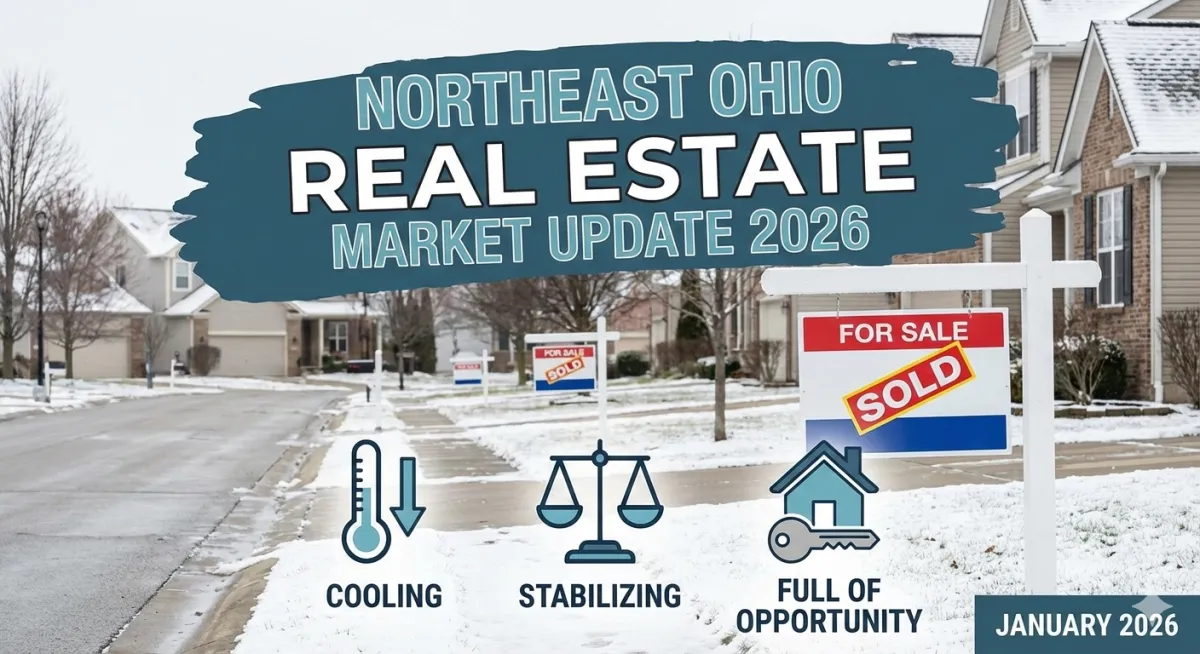
Northeast Ohio Real Estate Market Update 2026: Cooling, Stabilizing, and Full of Opportunity
After several unpredictable years, the 2026 real estate market in Northeast Ohio is finally settling into a more stable and sustainable rhythm, giving both buyers and sellers a clearer path forward. Instead of the bidding-war frenzy and double-digit price spikes of the pandemic era, the region is now defined by modest home price growth, gradually improving inventory, and a mortgage-rate environment that, while higher than the 2021 lows, is slowly becoming more manageable. For homeowners and aspiring buyers across the Cleveland–Akron corridor and surrounding suburbs, this shift points to a year of cautious optimism rather than fear of a crash or runaway prices.
One of the biggest storylines in 2026 is that Ohio as a whole—and Northeast Ohio in particular—is moving into the national spotlight because of its mix of affordability and economic stability. National housing economists expect a rebound in sales activity this year, with existing-home sales projected to rise after several sluggish years, and markets in the Midwest are positioned to outperform many coastal metros due to better alignment between local incomes and home prices. Within that context, cities and suburbs in and around Cleveland and Akron offer something that is increasingly rare: entry points for first-time buyers and investors that still pencil out, even with mortgage rates hovering around the 6% range instead of the ultra-low levels seen earlier in the decade.
Price trends reflect this “slow and steady” environment more than boom‑or‑bust conditions. Forecasts for markets like Cleveland point to home values edging up by roughly 2–3% into late 2026, with some sources projecting around 2.8% appreciation by September and a modestly higher increase when looking at the year as a whole. This is a meaningful shift from the volatility of recent years: values are expected to rise enough to protect equity and support long‑term growth, but not so fast that buyers are permanently priced out or forced into frantic bidding just to enter the market. For many local homeowners, that balance helps reinforce confidence that their property will remain a stable, long-term asset rather than a speculative bubble.
Inventory is another area where the tide is slowly turning in favor of a healthier market. Across Ohio, listings are gradually increasing after years of being squeezed by owners locked into ultra‑low mortgage rates and hesitant to move. Buyers across Northeast Ohio are now seeing more options and a bit more time to make decisions, with fewer extreme multiple‑offer situations than during the peak pandemic period, even though truly well‑priced, move‑in‑ready homes still tend to attract strong interest. This evolving landscape is pushing sellers to adjust: homes that are thoughtfully prepared, accurately priced, and professionally marketed are the ones capturing attention, while properties that are outdated or overpriced are more likely to sit longer and require price reductions.
Mortgage rates are still shaping the pace of the market, but in 2026 they are acting more like a headwind than a brick wall. Leading housing analysts expect the average 30‑year fixed rate to hover near or just above 6% this year, down from levels closer to the upper 6s or low 7s at various points over the last couple of years. Even relatively small improvements in borrowing costs can unlock significant demand in regions like Northeast Ohio, where lower home prices magnify the impact of each fraction of a percent drop in rates on a buyer’s monthly payment. As more households regain the ability to qualify at these levels, and as rate‑sensitive buyers who have been sitting on the sidelines re‑enter the market, the stage is set for a gradual but noticeable uptick in purchase activity.
Within the region, certain communities are emerging as standout areas to watch, particularly for first-time buyers. Garfield Heights, just southeast of Cleveland, recently earned national recognition on a list of the top housing markets for first-time buyers in 2026, thanks to its relatively low median listing price—around $140,000—and solid access to jobs and amenities. Other Northeast Ohio suburbs such as Mentor, Willoughby, Solon, Twinsburg, Hudson, and Chardon continue to draw steady demand for their blend of good schools, parks, and affordability compared with higher‑priced metros across the country. These patterns underline a broader trend: as remote and hybrid work remain common and cost of living remains a core concern, more buyers are willing to look toward the Midwest for a better balance of price, space, and lifestyle.
For buyers, this market offers a nuanced mix of challenges and opportunities. The days of expecting rock‑bottom mortgage rates or steep price cuts are likely over, but the environment is far less frantic than in recent memory, and Northeast Ohio’s relatively low price baseline gives buyers more room to work within their budgets. Securing a strong pre‑approval, being realistic about must‑haves versus nice‑to‑haves, and focusing on well‑located, structurally sound homes rather than chasing perfection are smart strategies in 2026. For those willing to tackle cosmetic improvements, dated but solid properties can still present opportunities for building equity over time, especially if purchased in neighborhoods with growing demand.
Sellers, on the other hand, are being called to embrace a more professional, data‑driven approach than during the automatic‑offer days of a few years ago. Pricing a home based on recent comparable sales and current competition—not on aspirational numbers or outdated headlines—is essential to capturing motivated buyers early in the listing period. Investing in basic repairs, strategic updates, and thoughtful staging pays off more in this climate, because buyers have enough options to pass on homes that feel neglected or overpriced. Partnering with an experienced local agent who understands micro‑market trends in specific areas—whether that is inner‑ring suburbs like Lakewood and Parma or exurban communities farther out—can make the difference between multiple solid offers and weeks of little activity.
Investors are also paying attention to Northeast Ohio’s trajectory in 2026. With national forecasts pointing to a long, gradual recovery rather than a sudden surge, many are seeking markets with steady appreciation, resilient rental demand, and relatively low entry costs—criteria that cities like Cleveland and Akron increasingly meet. Strong rental fundamentals, ongoing economic development, and the region’s affordability compared to coastal and high‑growth Sun Belt markets are supporting interest in both small multifamily properties and single‑family rentals. While cap rates may compress slightly as prices edge up, the potential for consistent cash flow and long‑term appreciation keeps Northeast Ohio on the radar of both local and out‑of‑state investors.
Overall, the 2026 Northeast Ohio real estate story is not one of dramatic headlines but of quiet, incremental progress toward a healthier, more sustainable market. Buyers can expect more choices and a bit more negotiating power than they had during the pandemic peak, though competition remains real for the best homes; sellers can still achieve strong prices, but only when they respect current market realities and present their properties at their best. For anyone considering a move, investment, or strategic housing decision this year, staying informed about local trends—and recognizing the unique affordability advantage this region still holds—will be the key to making confident, well‑timed moves in Northeast Ohio real estate.